Practice test 7
33 questions · 60 minutes · pass with 17
Answer every question, then tap Check results. Only then will you see which answers were right.
-
Question 1Not answered
Who cannot be directly elected as a citizen in Germany?
Correct answer: the Federal President
The Federal President is not elected directly by the people but by the Federal Convention (Bundesversammlung) every five years (Art. 54). The Bundestag and state parliaments, by contrast, are elected directly.
-
Question 2Not answered
Where does the European Parliament work?
Correct answer: Strasbourg, Luxembourg and Brussels
The European Parliament works at three locations: plenary sittings in Strasbourg, committee and group meetings in Brussels, and the secretariat in Luxembourg. This split is enshrined in the EU treaties.
-
Question 3Not answered
What does "constitutional state" mean in Germany?
Correct answer: The state must obey the law.
In a constitutional state the state itself is bound by law and statute (Article 20(3) of the Basic Law). Citizens can challenge state actions in court if they believe the state has overstepped the law.
-
Question 4Not answered
At which demonstrations in Germany did people shout "We are the people"?
Correct answer: at the Monday demonstrations in 1989 in the GDR
The chant "We are the people" rang out in autumn 1989 at the Monday demonstrations in Leipzig and other GDR cities. These peaceful protests brought down the SED regime and shortly afterwards led to the fall of the Berlin Wall.
-
Question 5Not answered
Who is not allowed to live together as a couple in Germany?
Correct answer: Anne (13 years old) and Tim (25 years old)
Sexual relations with children under 14 are a criminal offence without exception under §176 StGB, so living together as a couple is not permitted. Absolute criminal liability ends at 14, with further age-based rules up to 18.
-
Question 6Not answered
The more "second votes" a party gets in a federal election, the ...
Correct answer: more seats the party gets in parliament.
The "second vote" decides each party's share of seats in the Bundestag: the higher a party's second-vote share, the more seats it receives. The "first vote" instead chooses the direct constituency MP.
-
Question 7Not answered
Elections in Germany are free. What does that mean?
Correct answer: Every person can decide without coercion whether they want to vote and who they want to vote for.
Free elections mean every person decides without pressure, threats or rewards whether and for whom to vote. This principle in Article 38 of the Basic Law forbids vote-buying and any political coercion by the state, employers or family.
-
Question 8Not answered
In Germany ...
Correct answer: you may only be married to one partner at a time.
Germany allows only monogamous marriage: under §1306 BGB, a marriage is void if a partner is already married. Bigamy is also a criminal offence under §172 StGB.
-
Question 9Not answered
The Federal Republic of Germany is a founding member ...
Correct answer: of the European Union (EU).
The Federal Republic of Germany is a founding member of what is now the EU: in 1951 it joined the predecessor ECSC, and in 1957 the EEC under the Treaties of Rome. It only joined NATO in 1955 and the UN in 1973.
-
Question 10Not answered
The German state has many tasks. Which task is not one of them?
Correct answer: It pays for holidays for all citizens.
The state provides education, security and basic social services, but does not pay for citizens' holidays. Such private leisure expenses are not part of public services and are not funded by taxes.
-
Question 11Not answered
What is meant by the right of "freedom of movement" in Germany?
Correct answer: You can choose your own place of residence.
Freedom of movement under Article 11 of the Basic Law allows all Germans to choose where to live and reside anywhere in the federal territory. This freedom was severely restricted in the former East Germany (GDR).
-
Question 12Not answered
In which year did Hitler become Reich Chancellor?
Correct answer: 1933
Adolf Hitler was appointed Reich Chancellor by President Paul von Hindenburg on 30 January 1933. Within months he dismantled the parliamentary democracy of the Weimar Republic through the Enabling Act of March 1933.
-
Question 13Not answered
What you need to be able to do for work will change very quickly in the future. What can you do?
Correct answer: Adults have to keep on learning even after they finish school.
Lifelong learning is essential in a fast-changing labour market: jobs, technologies and requirements shift quickly. Further training at adult education centres, chambers of commerce or via vocational courses helps maintain employability.
-
Question 14Not answered
Many people in Germany do voluntary work in their free time. What does that mean?
Correct answer: They work voluntarily and unpaid in clubs and associations.
Volunteer work means engaging for others voluntarily and without pay, typically in clubs, associations, churches or the fire brigade. About one in three people aged over 14 in Germany takes part in some form of volunteering.
-
Question 15Not answered
A party in the German Bundestag wants to abolish freedom of the press. Is that possible?
Correct answer: No, because freedom of the press is a fundamental right. It cannot be abolished.
Freedom of the press is enshrined in Article 5 and is part of the free democratic basic order. The "eternity clause" in Article 79(3) protects such core rights from abolition, so even a two-thirds majority cannot remove them.
-
Question 16Not answered
Which right is one of the fundamental rights in Germany?
Correct answer: Freedom of opinion
Freedom of expression under Article 5 of the Basic Law is a classic fundamental right and protects publicly stating one's own views. Vigilante justice or the right of the fist contradict the state's monopoly on force and are not rights.
-
Question 17Not answered
A young woman in Germany, 22 years old, lives with her boyfriend. The woman's parents don't like it because they don't like her boyfriend. What can the parents do?
Correct answer: They must respect their adult daughter's decision.
At 18, the daughter is of legal age and decides on her own life freely. The parents have no legal authority and must respect her choice.
-
Question 18Not answered
What is the name of the parliament for the whole of Germany?
Correct answer: Bundestag
Germany's national parliament is called the Bundestag and meets in the Reichstag building in Berlin. Its members are elected directly by the people every four years (Article 38).
-
Question 19Not answered
A woman who has a two-year-old child applies for a job in Germany. What is an example of discrimination? She does not get the job only because she ...
Correct answer: is a mother.
Refusing to hire someone solely because she is a mother is sex discrimination and is prohibited under §1 and §7 of the AGG. Those affected can claim compensation and turn to the Federal Anti-Discrimination Agency.
-
Question 20Not answered
Where is the seat of the European Parliament?
Correct answer: Strasbourg
The official seat of the European Parliament is Strasbourg, where the twelve annual plenary sessions are held. Committee and group work mostly take place in Brussels, and the secretariat is in Luxembourg.
-
Question 21Not answered
What does the abbreviation FDP mean in Germany?
Correct answer: Free Democratic Party
FDP stands for Freie Demokratische Partei (Free Democratic Party). The liberal party was founded in 1948 and stands for market economics and civil liberties; figures such as Walter Scheel and Hans-Dietrich Genscher served as German foreign minister for the FDP.
-
Question 22Not answered
Which school-leaving qualification is normally required to study at a university in Germany?
Correct answer: the Abitur
The general higher education entrance qualification, commonly called Abitur, is the standard prerequisite for studying at a university. The Fachhochschulreife and master craftsman qualifications also open up higher education in specific fields.
-
Question 23Not answered
Germany is ...
Correct answer: a federal state.
Germany is a federal state composed of 16 states, each with its own constitution and parliament. The division of powers between the federation and the states is set out in Articles 30 and 70 ff. of the Basic Law.
-
Question 24Not answered
Which German state was formerly part of the GDR?
Correct answer: Mecklenburg-Western Pomerania
Mecklenburg-Western Pomerania on the Baltic coast was part of the GDR until 1990 and is today one of the five new federal states. Its capital is Schwerin; the state is sparsely populated and famous for lakes, islands like Rügen and Usedom, and the Hanseatic cities of Rostock and Stralsund.
-
Question 25Not answered
In Germany, married couples are allowed to divorce. They usually have to observe the "year of separation". What does that mean?
Correct answer: The spouses live their separate lives for at least one year. After that, divorce is possible
The year of separation under §1565 BGB requires spouses to live apart for at least one year before a divorce can be granted. This is the legislator's test that the marriage has truly failed.
-
Question 26Not answered
Parents in Germany can get help with parenting problems from the ...
Correct answer: Youth Welfare Office.
Under §16 ff. SGB VIII, the Jugendamt is the central point of contact for families and offers free counselling on parenting problems. It also arranges support services such as family counselling and educational mentors.
-
Question 27Not answered
In Germany, what is the association of members of a party in parliament called?
Correct answer: parliamentary group
An association of MPs from the same party in the Bundestag is called a Fraktion (parliamentary group). A Fraktion requires at least 5 percent of Bundestag members and gains special rights such as speaking time and resources.
-
Question 28Not answered
Germany is ...
Correct answer: a democratic and social federal state.
Article 20(1) of the Basic Law defines Germany as a "democratic and social federal state." Democracy, the social-state principle and federalism are thus core structural principles, protected against amendment by the eternity clause in Article 79(3).
-
Question 29Not answered
People in Germany live according to the principle of religious tolerance. What does that mean?
Correct answer: Everyone can believe what they want.
Religious tolerance means that everyone is free to choose, practise or reject a faith. Freedom of religion and belief is enshrined as an inviolable fundamental right in Article 4 of the Basic Law.
-
Question 30Not answered
Why is the period in autumn 1989 in the GDR called "Die Wende"? During this time, the GDR changed politically ...
Correct answer: from a dictatorship to democracy.
"Die Wende" of autumn 1989 names the peaceful transition of the GDR from an SED dictatorship to a democracy. The Monday demonstrations, the fall of the Wall on 9 November and the first free Volkskammer elections in March 1990 paved the way for reunification.
-
Question 31Not answered
What do you call the head of government in Baden-Württemberg?
Correct answer: Minister-President
The head of government of a German territorial state such as Baden-Württemberg holds the title of Minister-President. He or she is elected by the state parliament and leads the cabinet.
-
Question 32Not answered
Which minister does Baden-Württemberg not have?
Correct answer: Foreign Minister
Foreign policy is constitutionally a federal matter, not a state one. Baden-Württemberg therefore has no foreign minister; external relations are handled federally by the German Foreign Office.
-
Question 33Not answered
Which coat of arms belongs to the federal state of Baden-Württemberg?
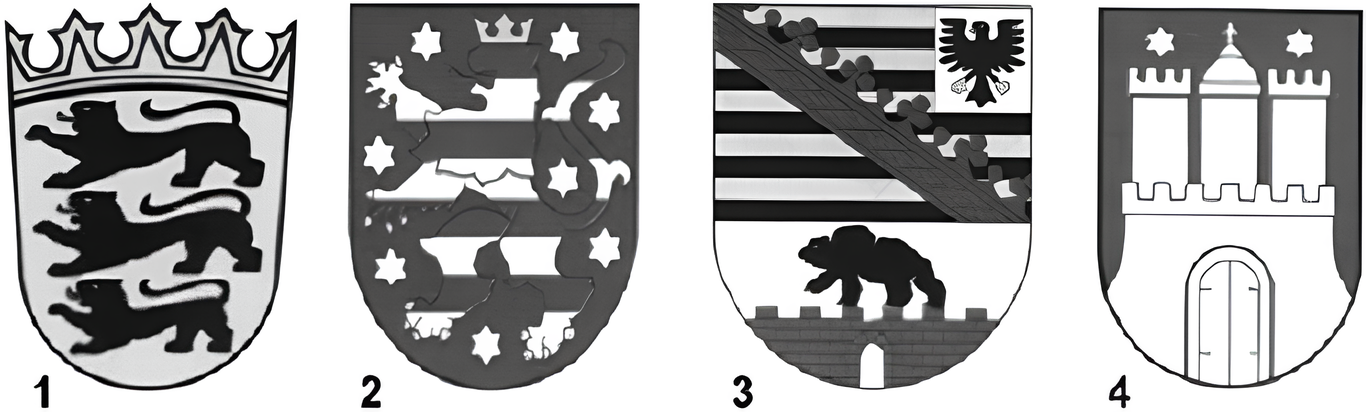
Correct answer: Picture 1
Baden-Württemberg's coat of arms shows three black walking lions on a gold field, derived from the Staufer Duchy of Swabia. The current design dates back to the state's founding in 1952.

-
Question 31Not answered
What do you call the head of government in Bavaria?
Correct answer: Minister-President
Bavaria's head of government holds the title Minister-President and is elected by the state parliament. He leads the cabinet and represents the Free State externally, including in the federal Bundesrat.
-
Question 32Not answered
Which minister does Bavaria not have?
Correct answer: Foreign Minister
Foreign policy is a federal matter under the Basic Law, so Bavaria, like all states, has no foreign minister. Its cabinet instead covers areas such as interior, finance, justice and education.
-
Question 33Not answered
Which coat of arms belongs to the Free State of Bavaria?
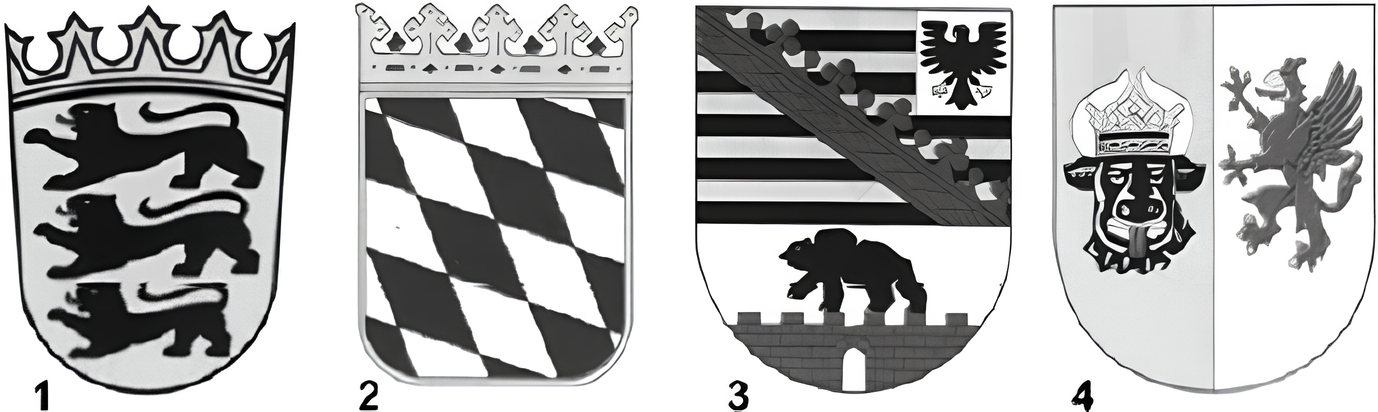
Correct answer: Picture 2
Bavaria's large state coat of arms features the famous white-and-blue lozenges of the Wittelsbachs in its inescutcheon, alongside fields with the Palatinate lion, the Franconian rake and the Veldenz lion. Bavaria officially holds the title Free State.

-
Question 31Not answered
What do you call the head of government of the city state of Berlin?
Correct answer: Governing Mayor / Governing Mayoress
Berlin's head of government is called the Governing Mayor and leads the Berlin Senate. This title is unique to Berlin among Germany's federal states.
-
Question 32Not answered
Which senator does Berlin not have?
Correct answer: Senator for External Relations
External relations are a federal responsibility, so the Berlin Senate has no Senator for External Relations. The Senate instead covers areas such as interior, finance, justice, education and urban development.
-
Question 33Not answered
Which coat of arms belongs to the federal state of Berlin?
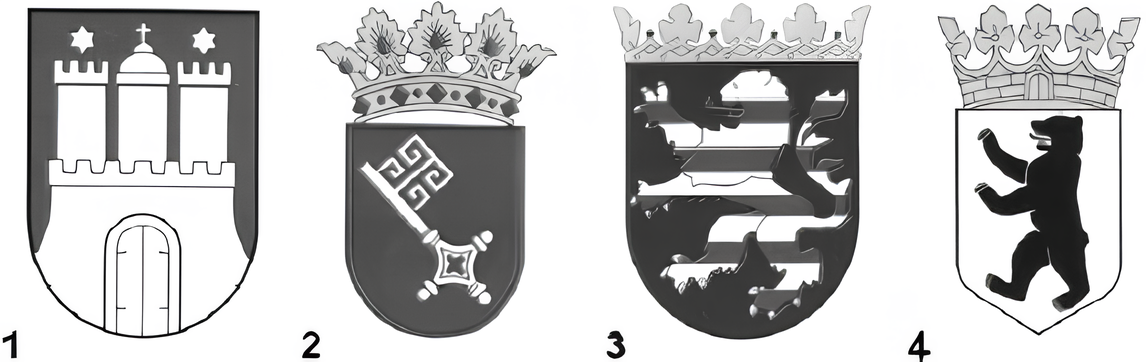
Correct answer: Picture 4
Berlin's coat of arms shows an upright black bear on a white shield, topped with a golden mural crown. The Berlin bear has been the city's emblem since the 13th century.

-
Question 31Not answered
What do you call the head of government in Brandenburg?
Correct answer: Minister-President
Brandenburg's head of government holds the title of Minister-President and is elected by the state parliament in Potsdam. He leads the cabinet and represents the state in the federal Bundesrat.
-
Question 32Not answered
Which minister does Brandenburg not have?
Correct answer: Foreign Minister
Foreign policy is a federal responsibility, so Brandenburg, like all states, has no foreign minister. The state cabinet instead covers areas such as interior, finance, education and agriculture.
-
Question 33Not answered
Which coat of arms belongs to the federal state of Brandenburg?
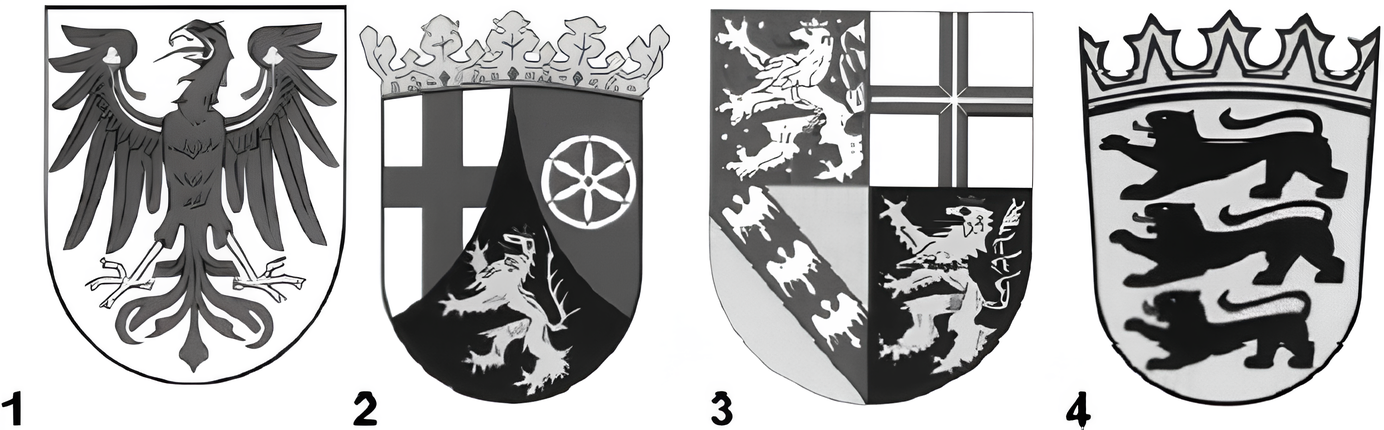
Correct answer: Picture 1
Brandenburg's coat of arms shows a red eagle with golden talons on a white shield. The Brandenburg eagle dates back to the Margraves of Brandenburg in the 12th century.

-
Question 31Not answered
What do you call the head of government of the city state of Bremen?
Correct answer: President of the Senate
Bremen's head of government holds the title President of the Senate and is simultaneously Mayor of the city of Bremen. He leads the Bremen Senate and represents the state externally.
-
Question 32Not answered
Which senator does Bremen not have?
Correct answer: Senator for External Relations
External relations are constitutionally a federal matter, so Bremen's Senate has no Senator for External Relations. Its portfolios instead cover interior, finance, education and ports.
-
Question 33Not answered
Which coat of arms belongs to the Free Hanseatic City of Bremen?
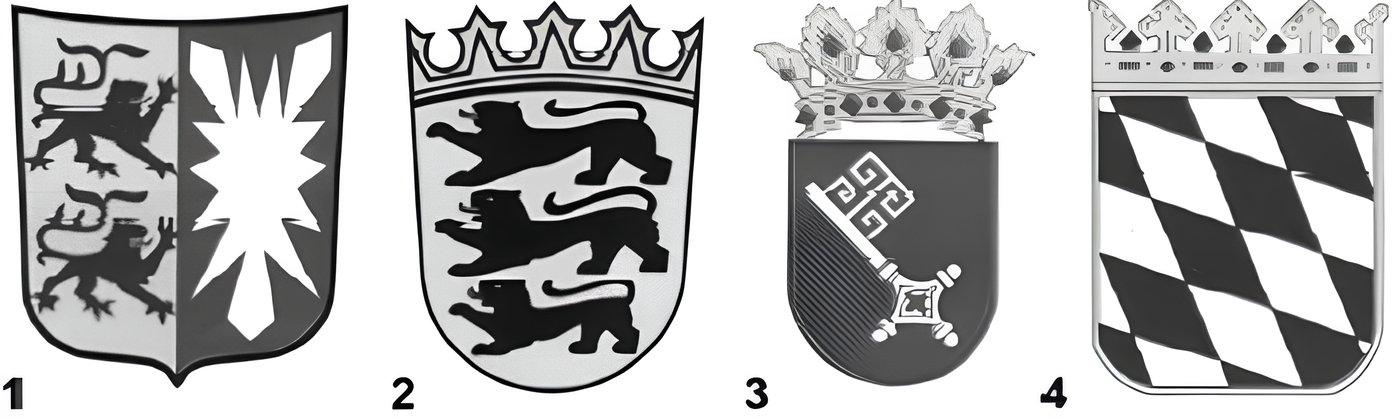
Correct answer: Picture 3
The arms of the Free Hanseatic City of Bremen show a silver key with the bit pointing upwards on a red field. The key refers to Saint Peter, patron of Bremen Cathedral.

-
Question 31Not answered
What do you call the head of government of the city state of Hamburg?
Correct answer: First Mayor / First Mayoress
Hamburg's head of government holds the title First Mayor and leads the Hamburg Senate. The title distinguishes the office from ordinary mayors of other cities.
-
Question 32Not answered
Which senator does Hamburg not have?
Correct answer: Senator for External Relations
Foreign policy is a federal matter, so Hamburg's Senate has no Senator for External Relations. Instead it has portfolios such as interior, finance, justice, schools and economy/ports.
-
Question 33Not answered
Which coat of arms belongs to the Free and Hanseatic City of Hamburg?
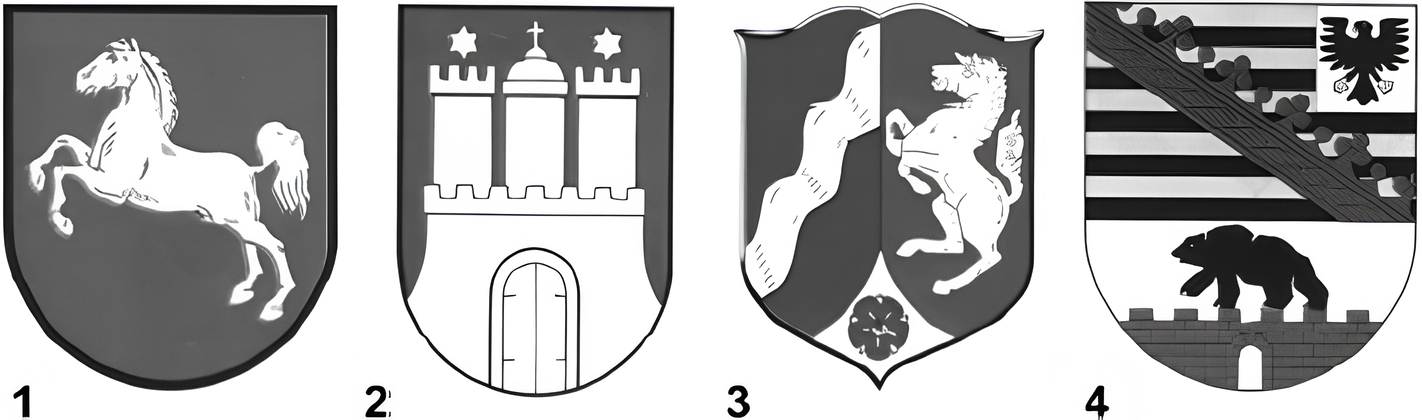
Correct answer: Picture 2
Hamburg's coat of arms shows a white castle with three towers on a red field, symbolising the Hanseatic city's independence. The cross on the central tower refers to the Church of St Mary.

-
Question 31Not answered
What do you call the head of government in Hesse?
Correct answer: Minister-President
Hesse's head of government holds the title Minister-President and is elected by the state parliament in Wiesbaden. He leads the cabinet and represents Hesse in the federal Bundesrat.
-
Question 32Not answered
Which minister does Hesse not have?
Correct answer: Foreign Minister
Foreign policy is a federal matter under the Basic Law, so Hesse has no foreign minister. Its cabinet instead covers areas such as interior, finance, justice, education and economy.
-
Question 33Not answered
Which coat of arms belongs to the federal state of Hesse?
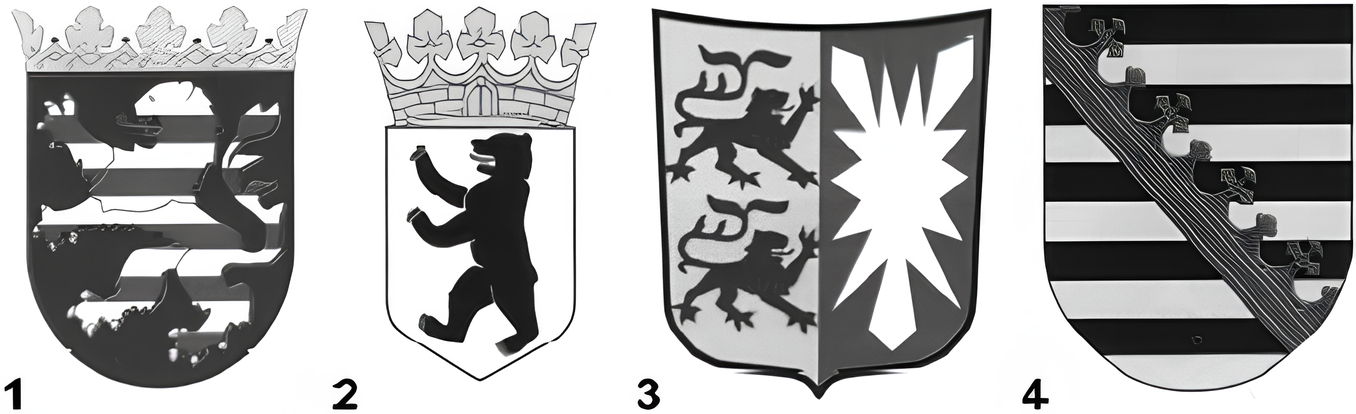
Correct answer: Picture 1
Hesse's coat of arms shows a lion striped red and silver nine times on a blue field, the so-called colourful lion of the Landgraves of Thuringia and Hesse. The design dates back to the Middle Ages.

-
Question 31Not answered
What do you call the head of government in Mecklenburg-Vorpommern?
Correct answer: Minister-President
Mecklenburg-Vorpommern's head of government holds the title Minister-President and is elected by the state parliament in Schwerin. He leads the cabinet and represents the state in the federal Bundesrat.
-
Question 32Not answered
Which minister does Mecklenburg-Vorpommern not have?
Correct answer: Foreign Minister
Foreign policy is a federal responsibility, so Mecklenburg-Vorpommern, like all states, has no foreign minister. Its cabinet covers areas such as interior, finance, education, justice and agriculture.
-
Question 33Not answered
Which coat of arms belongs to the federal state of Mecklenburg-Vorpommern?
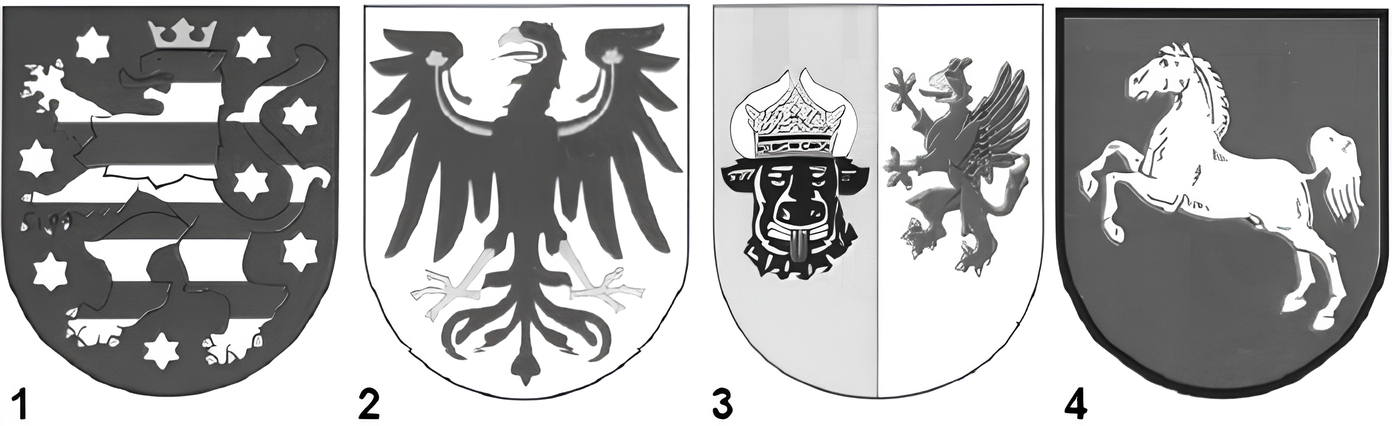
Correct answer: Picture 3
Mecklenburg-Vorpommern's coat of arms is quartered and combines the Mecklenburg bull's head, the Pomeranian griffin, the Brandenburg eagle and a second bull's head for Mecklenburg-Strelitz. It depicts the historic regions of the state.

-
Question 31Not answered
What do you call the head of government in Lower Saxony?
Correct answer: Minister-President
Lower Saxony's head of government is the Minister-President, elected by the state parliament. They lead the state cabinet, appoint ministers and represent the state in the Bundesrat.
-
Question 32Not answered
Which minister does Lower Saxony not have?
Correct answer: Foreign Minister
Foreign policy is a federal responsibility under the Basic Law, not a state matter. Lower Saxony therefore has no Foreign Minister; the Federal Foreign Office in Berlin handles diplomacy for all states.
-
Question 33Not answered
Which coat of arms belongs to the federal state of Lower Saxony?
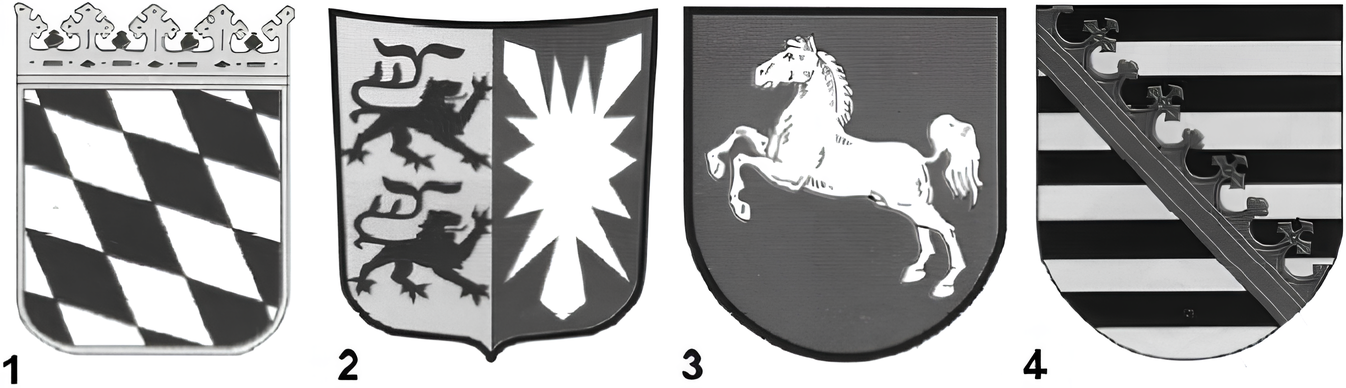
Correct answer: Picture 3
Lower Saxony bears the Saxon Steed: a white, leaping horse on a red field. The motif traces back to ancient Saxon tribal emblems and appears across several northern German regions.

-
Question 31Not answered
What do you call the head of government in North Rhine-Westphalia?
Correct answer: Minister-President
North Rhine-Westphalia's head of government is the Minister-President, elected by the state parliament. They lead the cabinet in Düsseldorf, set policy guidelines and appoint the ministers.
-
Question 32Not answered
Which minister does North Rhine-Westphalia not have?
Correct answer: Foreign Minister
Foreign policy is a federal matter, so North Rhine-Westphalia has no Foreign Minister. The Federal Foreign Office in Berlin is responsible; the state does, however, maintain its own representation to the federal government.
-
Question 33Not answered
Which coat of arms belongs to the federal state of North Rhine-Westphalia?
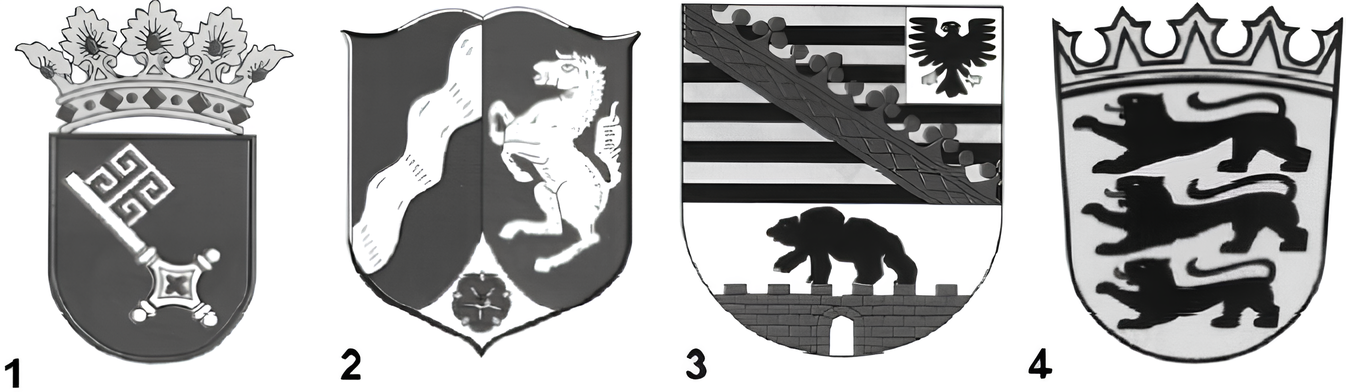
Correct answer: Picture 2
North Rhine-Westphalia's arms combine three symbols: the silver Rhine wave, the white Westphalian horse and the red Lippe rose. They represent the state's three historic regions of Rhineland, Westphalia and Lippe.

-
Question 31Not answered
What do you call the head of government in Rhineland-Palatinate?
Correct answer: Minister-President
Rhineland-Palatinate's head of government holds the title of Minister-President and is elected by the state parliament. They head the state chancellery in Mainz and represent the state in the Bundesrat.
-
Question 32Not answered
Which minister does Rhineland-Palatinate not have?
Correct answer: Foreign Minister
Foreign policy is a federal responsibility, so no state has a Foreign Minister. Rhineland-Palatinate does, however, maintain a state representation in Berlin and offices in Brussels.
-
Question 33Not answered
Which coat of arms belongs to the federal state of Rhineland-Palatinate?
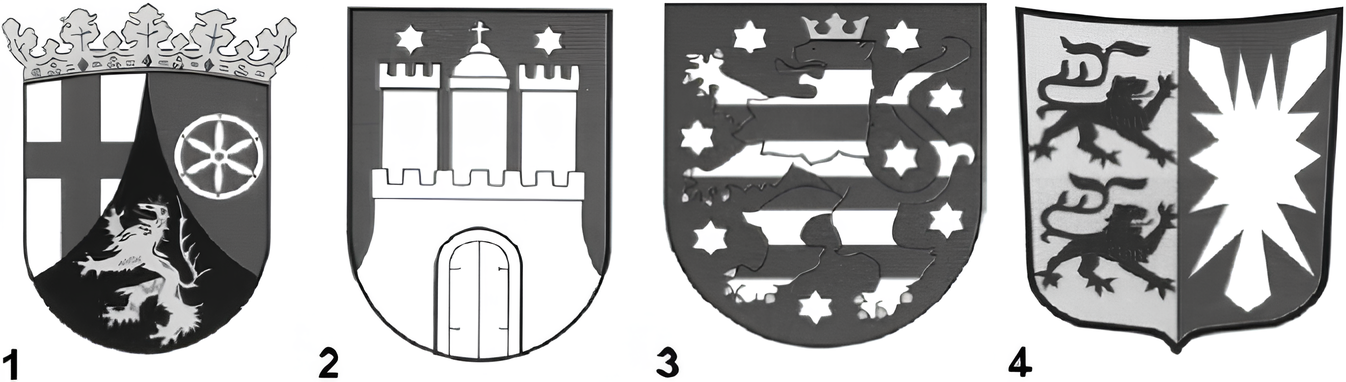
Correct answer: Picture 1
Rhineland-Palatinate bears the red Palatinate Lion on a gold field. The heraldic beast dates back to the Electoral Palatinate and unites the state's Palatine, Rhenish-Hessian and Trier regions.

-
Question 31Not answered
What do you call the head of government of Saarland?
Correct answer: Minister-President
Saarland's head of government is called the Minister-President, elected by the state parliament. They head the state chancellery in Saarbrücken and represent Saarland in the Bundesrat in Berlin.
-
Question 32Not answered
Which minister does Saarland not have?
Correct answer: Foreign Minister
Foreign policy is a federal competence, so Saarland has no Foreign Minister. Due to its proximity to France, it does maintain especially close cross-border ties through the SaarLorLux Greater Region.
-
Question 33Not answered
Which coat of arms belongs to the federal state of Saarland?
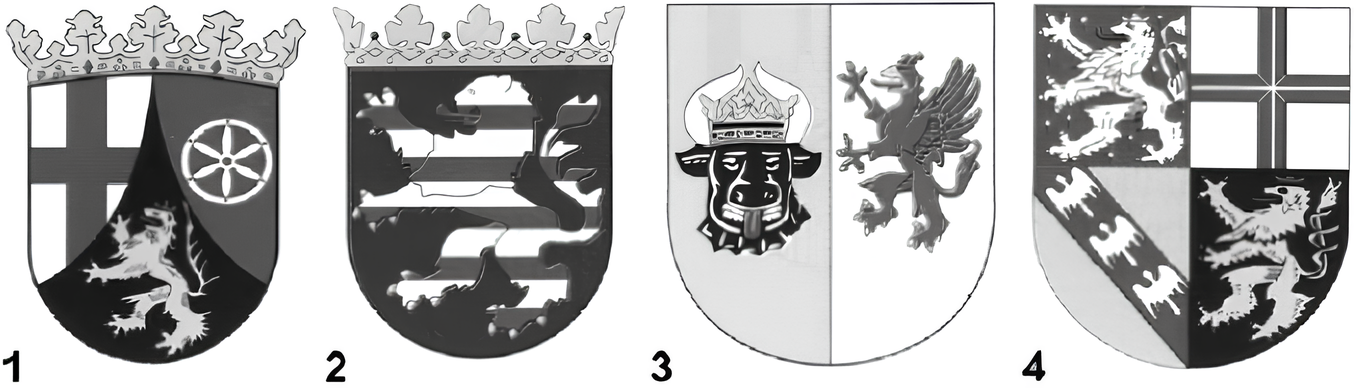
Correct answer: Picture 4
Saarland bears a quartered coat of arms with the emblems of Trier, the Electoral Palatinate, Nassau-Saarbrücken and Lorraine. The fields recall the region's historic territorial allegiances.

-
Question 31Not answered
What do you call the head of government in Saxony?
Correct answer: Minister-President
Saxony's head of government is called the Minister-President, elected by the state parliament. They lead the state government in Dresden and represent the Free State in the Bundesrat.
-
Question 32Not answered
Which minister does Saxony not have?
Correct answer: Foreign Minister
Foreign policy is exclusively a federal matter, so the Free State of Saxony has no Foreign Minister. The Federal Foreign Office in Berlin handles diplomacy.
-
Question 33Not answered
Which coat of arms belongs to the Free State of Saxony?
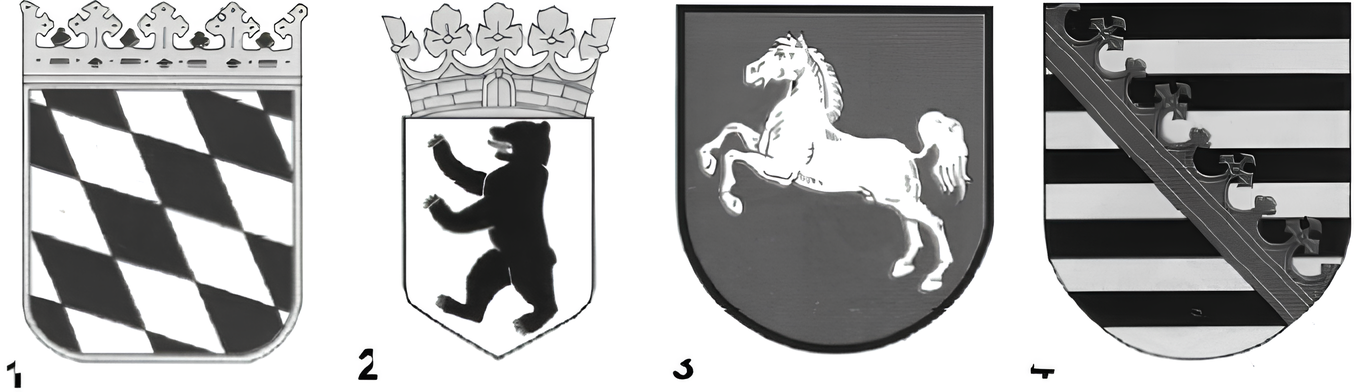
Correct answer: Picture 4
The Free State of Saxony's coat of arms shows black and gold horizontal bars overlaid with a diagonal green crown of rue. The design originates with the medieval House of Wettin.

-
Question 31Not answered
What do you call the head of government in Saxony-Anhalt?
Correct answer: Minister-President
Saxony-Anhalt's head of government is called the Minister-President, elected by the state parliament. They lead the state chancellery in Magdeburg and represent the state in the Bundesrat.
-
Question 32Not answered
Which minister does Saxony-Anhalt not have?
Correct answer: Foreign Minister
Foreign policy rests with the federal government under the Basic Law, so Saxony-Anhalt has no Foreign Minister. The Federal Foreign Office in Berlin is responsible.
-
Question 33Not answered
Which coat of arms belongs to the federal state of Saxony-Anhalt?
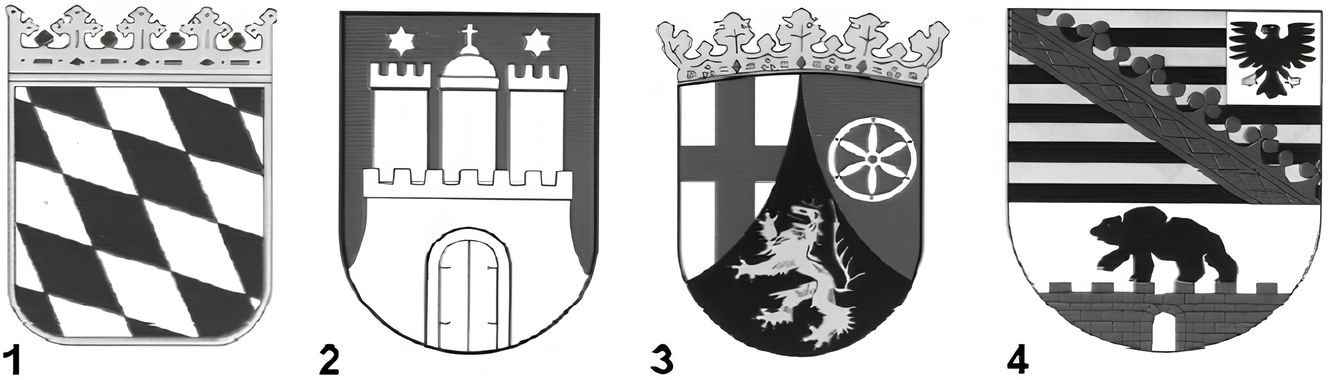
Correct answer: Picture 4
Saxony-Anhalt's arms show the black Ascanian bear on a red shield together with black-gold striped and rue-bedecked fields. They combine the emblems of Anhalt and the former Prussian Province of Saxony.

-
Question 31Not answered
What do you call the head of government in Schleswig-Holstein?
Correct answer: Minister-President
Schleswig-Holstein's head of government is the Minister-President, elected by the state parliament. They head the state chancellery in Kiel and represent the state in the Bundesrat.
-
Question 32Not answered
Which minister does Schleswig-Holstein not have?
Correct answer: Foreign Minister
Foreign policy is a federal task, so Schleswig-Holstein has no Foreign Minister. Given its location, the state nevertheless maintains close ties with Denmark and the wider Baltic region.
-
Question 33Not answered
Which coat of arms belongs to the federal state of Schleswig-Holstein?
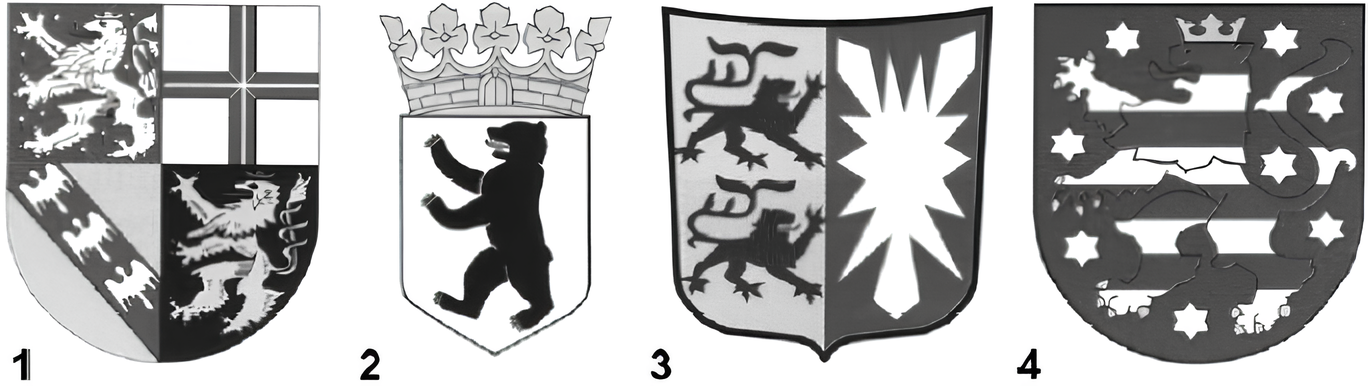
Correct answer: Picture 3
Schleswig-Holstein's coat of arms displays the two blue Schauenburg lions for Schleswig and the silver nettle leaf for Holstein. The design unites the two historic regions on one shield.

-
Question 31Not answered
What do you call the head of government in Thuringia?
Correct answer: Minister-President
Thuringia's head of government is called the Minister-President, elected by the state parliament. They lead the Thuringian state chancellery in Erfurt and represent the state in the Bundesrat.
-
Question 32Not answered
Which minister does Thuringia not have?
Correct answer: Foreign Minister
Foreign policy falls under the exclusive competence of the federal government, so Thuringia has no Foreign Minister. The Federal Foreign Office in Berlin handles such matters.
-
Question 33Not answered
Which coat of arms belongs to the Free State of Thuringia?
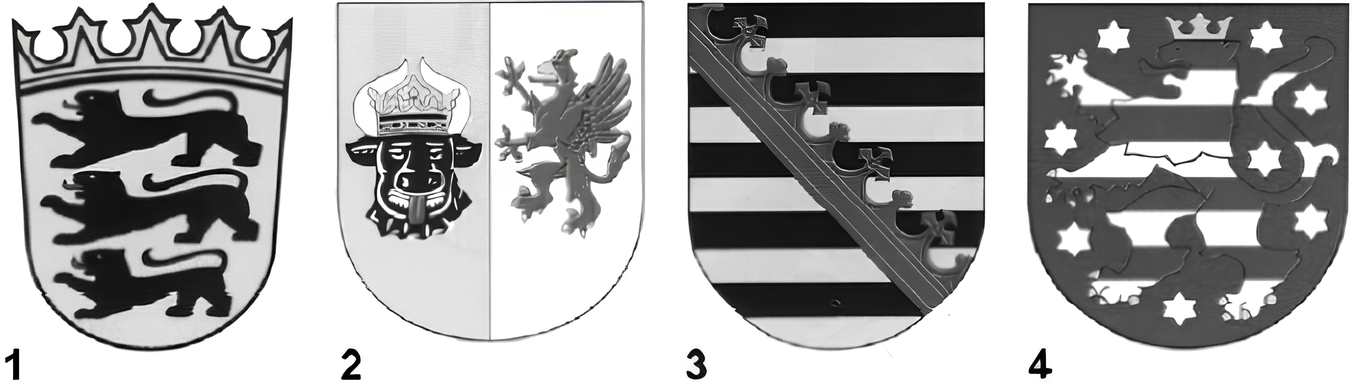
Correct answer: Picture 4
Thuringia's coat of arms shows a red lion with eight silver stars on a field of blue and silver bars. It originates with the historic Ludovingian lion and the Landgraves of Thuringia.

Your result
/ 33 correct
You pass with 17 or more correct answers.